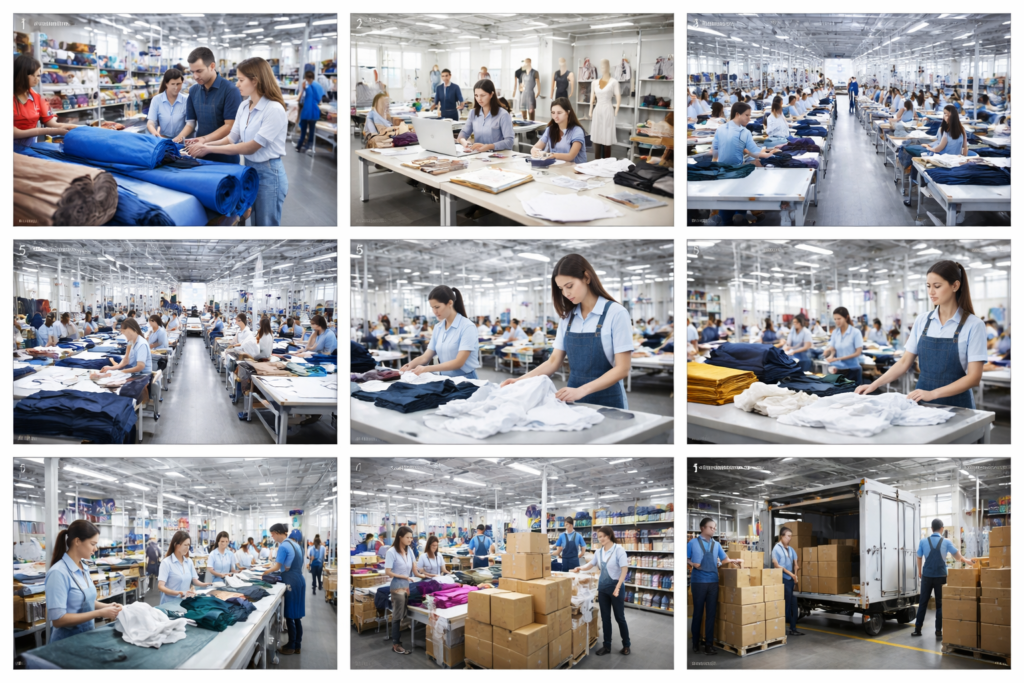
A Complete Journey from Fabric Selection to Finished Garment
Introduction: The Backbone of Women’s Fashion
Womenswear may appear effortless on the runway or in retail stores, but behind every well-constructed dress, tailored co-ord, kurti, or blouse lies a highly detailed and coordinated manufacturing process. Modern womenswear manufacturing blends creativity, craftsmanship, technical precision, skilled manpower, and advanced machinery.
Understanding how women’s garments are manufactured helps brands, retailers, and buyers appreciate the importance of fit, fabric quality, finishing, and consistency. This blog takes you inside a modern womenswear manufacturing unit and explains each stage—from fabric selection to final dispatch.
Understanding Modern Womenswear Manufacturing
Womenswear manufacturing has evolved significantly to meet changing fashion trends and diverse fit requirements. While traditional tailoring focused on handcrafted, small-batch production, today’s manufacturing units are designed for scalable production without compromising quality.
Modern womenswear manufacturers operate with:
-
Skilled design and product development teams
-
Advanced CAD and pattern-making systems
-
Industrial cutting and stitching machines
-
Structured quality control processes
The goal is to balance creativity and precision while ensuring efficiency and consistency across collections.
Fabric Selection: The Foundation of Womenswear Quality
Fabric plays a crucial role in womenswear manufacturing, influencing drape, comfort, durability, and overall appearance.
Common fabrics used in women’s garment manufacturing include:
-
Cotton and cotton blends
-
Rayon, viscose, and modal
-
Linen
-
Chiffon, georgette, and crepe
-
Structured and suiting blends
Before production begins, fabrics are tested for shrinkage, color fastness, pilling, and comfort. Fabric and material sourcing specialists ensure consistency and suitability for each garment category.
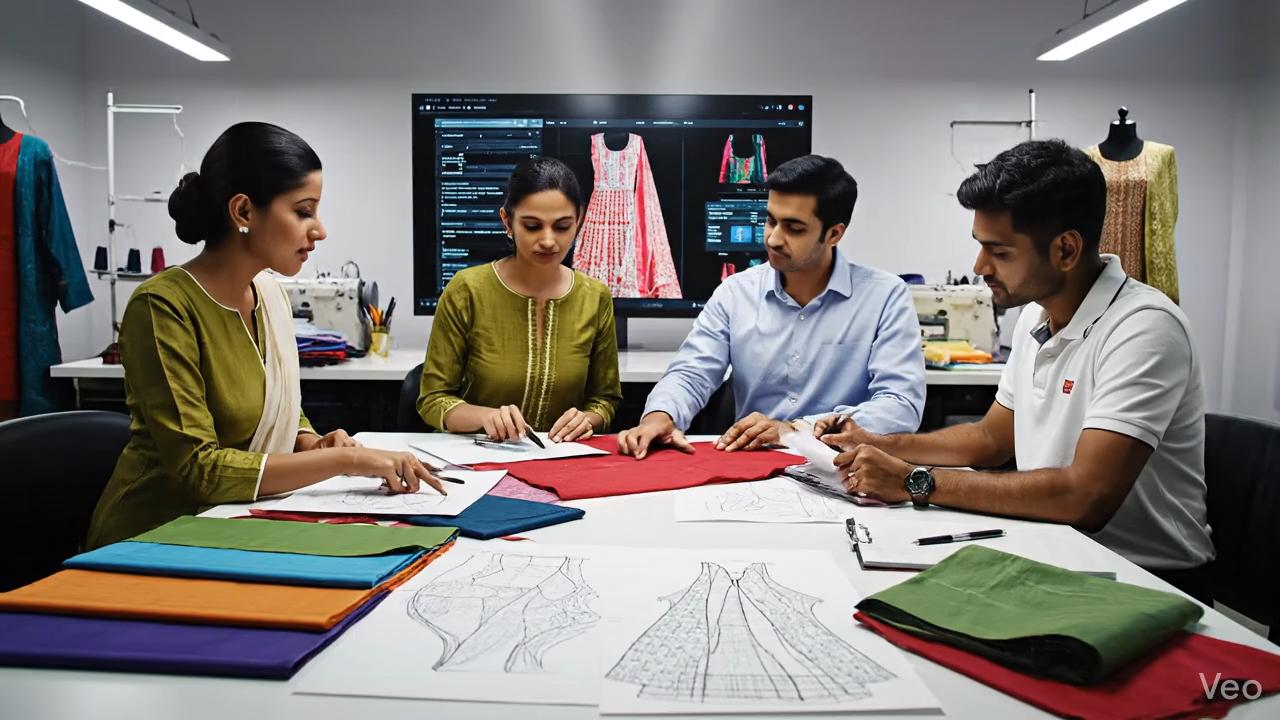
Design Planning & Concept Development
Design planning is the starting point of the womenswear production process. Designers translate creative concepts into production-ready styles by analyzing:
-
Market and seasonal trends
-
Target customer preferences
-
Fabric behavior and limitations
-
Target price points
Designs for dresses, tops, kurtis, co-ords, trousers, and ethnic wear are developed through sketches, digital designs, and technical packs.
Pattern Making: Perfecting Fit and Silhouette
Pattern making is a critical stage in womenswear manufacturing due to the complexity of silhouettes and size variations.
Pattern masters create precise patterns that define:
-
Fit and comfort
-
Proportions and drape
-
Garment structure and movement
Both manual techniques and CAD systems are used to develop and grade patterns across multiple sizes, ensuring consistent fit in bulk production.
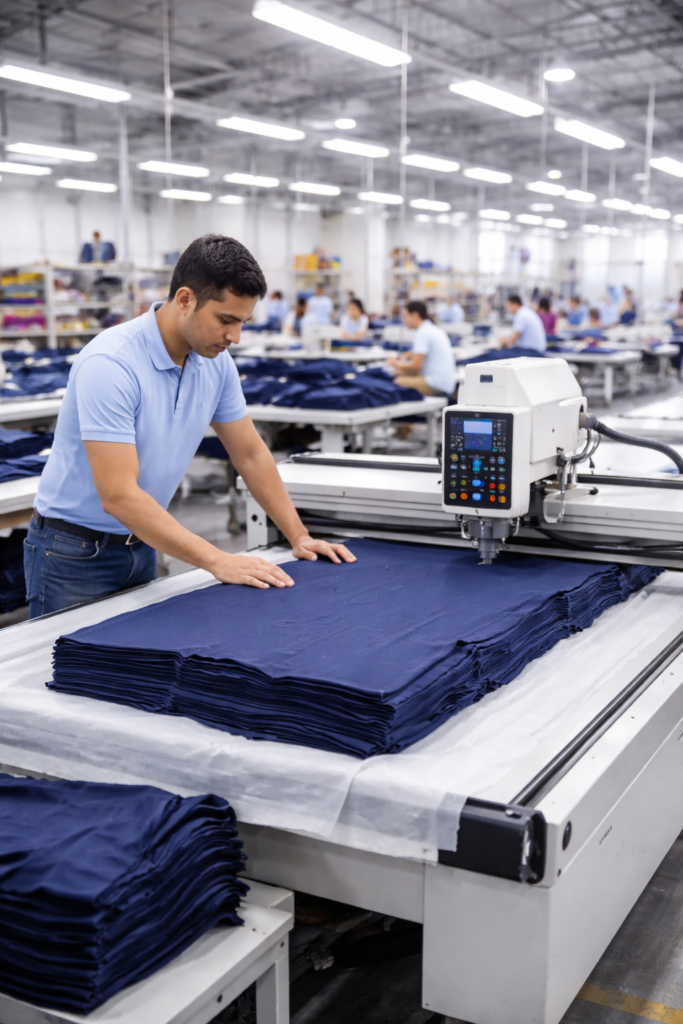
Fabric Cutting: Precision and Efficiency
Once patterns are finalized, fabric cutting begins. Modern womenswear manufacturing units use advanced cutting machines to handle layered fabrics efficiently.
Key objectives include:
-
Accurate cutting
-
Minimal fabric wastage
-
Consistency across all garment components
Precise cutting ensures smooth stitching and reduces production defects.
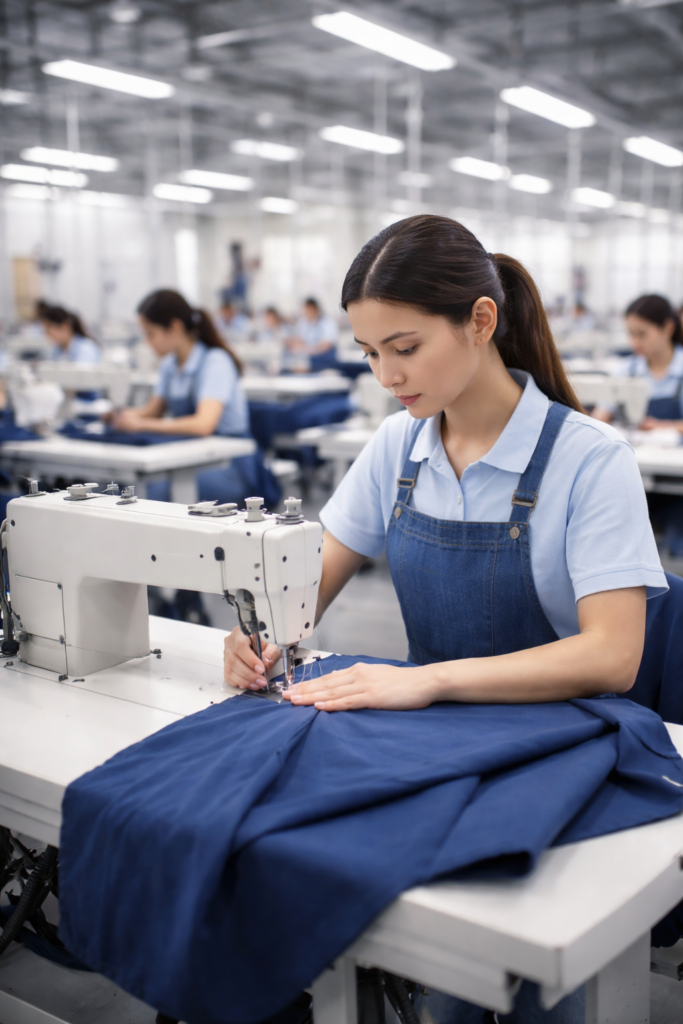
Stitching & Assembly: Crafting the Garment
Stitching is where individual fabric pieces are assembled into a finished garment. Industrial stitching machines are used alongside specialized operations for delicate fabrics and detailing.
Special attention is given to:
-
Necklines and sleeves
-
Seams and hems
-
Embellishments, buttons, and fastenings
Production and stitching supervisors monitor quality, workflow, and efficiency at every stage.
Sample Checking & Fit Evaluation
Before bulk production, samples are developed and evaluated to verify:
-
Fit and measurements
-
Construction quality
-
Overall appearance
Necessary adjustments are made to patterns or stitching techniques, ensuring smooth mass production with minimal rework.
Mass Production: Scaling with Consistency
Mass production in womenswear involves manufacturing large quantities while maintaining uniform quality across all styles.
This stage requires:
-
Efficient line planning
-
Skilled workforce management
-
Machine coordination
Well-structured womenswear manufacturing units ensure consistent quality across every piece produced.
Quality Control & Finishing
Quality control is conducted at multiple stages of the womenswear manufacturing process. Inspectors evaluate:
-
Stitching and construction
-
Measurements and fit
-
Fabric defects
-
Finishing and appearance
After inspection, garments undergo pressing, steaming, and finishing to achieve a polished, retail-ready look.
Final Product Presentation
Finished womenswear garments are reviewed internally and often displayed on mannequins or dress forms for final approval. Branding elements such as:
-
Labels
-
Tags
-
Size and care labels
are added during this stage in preparation for retail or export.
Packing, Logistics & Dispatch
Approved garments are folded, packed, and labeled according to buyer or export requirements. The logistics team handles:
-
Inventory management
-
Order consolidation
-
Domestic and international shipments
Efficient logistics ensure timely delivery and client satisfaction.
Technology in Womenswear Manufacturing
Technology enhances precision and productivity in womenswear manufacturing. Modern units utilize:
-
CAD systems for pattern development
-
Digital production planning tools
-
Automated cutting and stitching technologies
These innovations reduce errors, increase speed, and ensure consistent quality.
Sustainability in Womenswear Manufacturing
Sustainability is increasingly important in women’s garment manufacturing. Responsible manufacturers focus on:
-
Fabric waste reduction
-
Optimized cutting layouts
-
Ethical labor practices
-
Energy-efficient operations
Sustainable practices improve operational efficiency and strengthen brand reputation.
Why Choosing the Right Womenswear Manufacturer Matters
The right womenswear manufacturing partner ensures:
-
Consistent garment quality
-
On-time delivery
-
Cost efficiency
-
Scalable production capabilities
A reliable manufacturer becomes a long-term partner, supporting brand growth and market expansion.
Conclusion: From Fabric to Finished Womenswear
Modern womenswear manufacturing is a carefully coordinated process involving design, precision, quality control, and logistics. From fabric sourcing to final dispatch, every stage contributes to producing garments that meet contemporary standards of fit, comfort, and style.
By combining skilled teams, advanced technology, and structured processes, professional womenswear manufacturers deliver garments that brands can trust and customers can wear with confidence.